Deprecated: Creation of dynamic property WP_Term::$cat_ID is deprecated in /home/dopo5861/dev-mp-shop/wp-includes/category.php on line 378
Deprecated: Creation of dynamic property WP_Term::$category_count is deprecated in /home/dopo5861/dev-mp-shop/wp-includes/category.php on line 379
Deprecated: Creation of dynamic property WP_Term::$category_description is deprecated in /home/dopo5861/dev-mp-shop/wp-includes/category.php on line 380
Deprecated: Creation of dynamic property WP_Term::$cat_name is deprecated in /home/dopo5861/dev-mp-shop/wp-includes/category.php on line 381
Deprecated: Creation of dynamic property WP_Term::$category_nicename is deprecated in /home/dopo5861/dev-mp-shop/wp-includes/category.php on line 382
Deprecated: Creation of dynamic property WP_Term::$category_parent is deprecated in /home/dopo5861/dev-mp-shop/wp-includes/category.php on line 383
Deprecated: Creation of dynamic property WP_Block::$attributes is deprecated in /home/dopo5861/dev-mp-shop/wp-includes/class-wp-block.php on line 179
The tall, thin flute: perfect for bubbly
For champagne and sparkling wine there’s nothing better than the tall, thin flute, especially if you want to preserve the bubbles as long as possible. That’s what the narrow design and opening actually does. One tip to keep in mind is that you should avoid washing flutes in the dishwasher as the soap can coat the inside of the glass and stop bubbles forming when you pour out your champagne.
Smaller white wine glass: chilled to perfection
White wine glasses are a little smaller than your average red wine ones. That’s because you want to be filling the glasses with less wine and topping up more often – whites are generally chilled and if you leave it in the glass too long then it’s going to warm up. To keep it cooler for even longer, always hold the glass by the stem as much as you can.
Red wine glasses: the connoisseurs choice
Your ideal glass for red wine should be much bigger and that’s because you want to catch all those wonderful aromas and flavours as much as possible. You’ll want to move the wine around in the glass with a gentle swirling motion. A larger glass also enables your wine to breathe properly. There is a much wider range of red wine glasses on the market and it’s worth investing in a good quality set if you it’s an area that you want to explore more deeply.
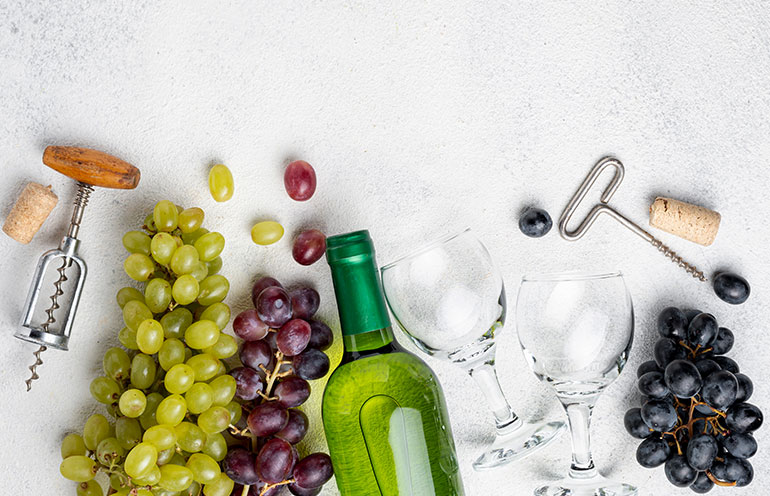
Glasses for sweet and fortified wines
These are much smaller than other wine glasses, mainly because it’s not the kind of drink that you polish off in one sitting. There’s still room to swirl the wine around but you’ll be perhaps having one or two glasses at most. These are great for aperitifs before you start the main meal. People used to opt for the traditional sherry glass for this but it’s well worth investing in something a little more classic in design.
Do you need a decanter?
Most people, frankly, don’t bother with decanting – the process of gently pouring wine into an open container so that it can breathe. While it is often seen as an affectation, if you have a wine that comes with a sediment then it’s the best way to avoid those bits at the bottom getting stirred up. If you’re having a special meal, decanting can often provide a little drama to the occasion especially if you’re indulging in a high quality bottle of wine.
Cleaning your wine glasses
For normal wine glasses, some soapy water and a soft sponge will normally do the job and it’s always best to rinse properly under the hot water tap to get rid of the excess soap. Always use a cotton or linen cloth that is less likely to leave marks. If you have wine glasses that are ultra-thin and expensive, you probably don’t want to risk them in the sink. Boil the kettle and hold the glass upside down in the steam for a few seconds, then flick the moisture out. It takes a bit of technique but this is the best way to clean such glasses. To dry them, again use a linen cloth but make sure that you are very gentle and take your time. Browse our collection of flutes, wines, decanters as well as coolers, pourers and openers.
]]>Deprecated: Creation of dynamic property WP_Term::$cat_ID is deprecated in /home/dopo5861/dev-mp-shop/wp-includes/category.php on line 378
Deprecated: Creation of dynamic property WP_Term::$category_count is deprecated in /home/dopo5861/dev-mp-shop/wp-includes/category.php on line 379
Deprecated: Creation of dynamic property WP_Term::$category_description is deprecated in /home/dopo5861/dev-mp-shop/wp-includes/category.php on line 380
Deprecated: Creation of dynamic property WP_Term::$cat_name is deprecated in /home/dopo5861/dev-mp-shop/wp-includes/category.php on line 381
Deprecated: Creation of dynamic property WP_Term::$category_nicename is deprecated in /home/dopo5861/dev-mp-shop/wp-includes/category.php on line 382
Deprecated: Creation of dynamic property WP_Term::$category_parent is deprecated in /home/dopo5861/dev-mp-shop/wp-includes/category.php on line 383
Deprecated: Creation of dynamic property WP_Block::$attributes is deprecated in /home/dopo5861/dev-mp-shop/wp-includes/class-wp-block.php on line 179
Deprecated: Creation of dynamic property WP_Block::$attributes is deprecated in /home/dopo5861/dev-mp-shop/wp-includes/class-wp-block.php on line 179
California
California is the most renowned region for American wine, and not without good reason. It accounts for nearly 90% of all wine produced in the US and has long been at the forefront of the American wine industry.
The state stretches 1,100 km along the coast and you’ll find vineyards throughout most of that area. The climate varies significantly as you travel from Anderson Valley in the North to Monterey and Santa Maria in the South. While coastal regions are significantly cooler than inland areas such as Central Valley, the one unifying factor in California is the lack of rain.
Napa Valley & Sonoma
The areas closest to the Pacific Ocean, such as Napa Valley and Sonoma, tend to host the more premium vineyards as they benefit from the cooling fog that rolls in off the water and brings welcome humidity and relief from the hot temperatures. This allows the grapes to ripen more slowly, retaining their acidity and freshness, and adding elegance and balance to the resulting wine.
Key Varietals
You’ll find pretty much any grape known to man growing in California, but the region is best known for its Cabernet Sauvignon, Zinfandel, Merlot, Pinot Noir, and Chardonnay.
Cabernet Sauvignon is the grape that really put California on the map and established its reputation as a region producing top-quality wines. Napa Valley is the home of Californian Cabernet and produces rich, bold wines with lots of black fruit and ripe tannins. They tend to be higher in alcohol, oakier and more fruit-driven than their French counterparts. Alexander Valley also produces sublime Cab Sav, distinctive by their fleshy and soft character.
Chardonnay is another European variety that has found great success on the other side of the pond. It is the most widely planted white grape in California and covers a range of styles, from the inexpensive, fruity wines from the Central Valley to the ultra-premium, elegant examples from cooler sites such as Los Carneros and Russian River in Sonoma.
Zinfandel (also known as Primitivo) has become a real signature variety of California throughout the state and produces rich, full-bodied, and often spicy red wines. It doesn’t always ripen evenly, so by the time all the grapes are ready, some will have started to raisin on the vine, adding extra concentration and complexity to the blend.
The region has also made great progress with Pinot Noir in recent years, with some top producers in the cooler regions like Sonoma, Monterey, and Santa Maria producing some fabulous examples.
Washington
The Pacific Northwest state of Washington is the second-largest wine producer in the US. The vast majority of vineyards in the area are planted to the east of the Cascade Mountains, where the mountain range acts as a rain barrier for the vineyards of Columbia Valley.
The climate here is continental, with dry, hot summers and cold winters. In fact, it’s not unusual for vines to be killed by severe frosts in winter. The warm, sunny days during the ripening season ensure that the grapes reach optimum ripeness, while the cool nights help them to retain their acidity and freshness. As a result, the region is rapidly gaining a reputation for its premium wines, notably Cabernet Sauvignon, Merlot and Chardonnay.
New York
On the East coast, New York is the main wine region and the third biggest producer in America.
The most important appellation to emerge has been Finger Lakes, where the deep lakes act as heat retainers, warming up the air of the surrounding vineyards during winter. Despite only starting to produce wine in the 1960’s, it has become one of the most exciting American wine regions, particularly noted for its Rieslings.
Oregon
Oregon is on the same latitude as Burgundy, albeit with more consistently sunny days, so it’s no surprise that this area is renowned for its Pinot Noir .
Here the vineyards are heavily influenced by the maritime climate. Cool, wet winters and warm dry summers are ideal for varieties such as Pinot Noir and aromatic whites like Pinot Gris that prefer a cooler climate. Oregon Pinot Noirs have more acidity than their Californian neighbors and the best are incredibly age-worthy, making them some of the most premium American wines available. Look to Willamette Valley for some of Oregon’s best wines.
Virginia
Other states that are showing some promise as top wine producers, include Virginia, where there are now nearly 300 winemakers who are winning praise for their Bordeaux-style Cabernets and Merlots and highly perfumed Viogniers.
Although it is a fairly warm and humid state, the diversity of microclimates across the region, from the maritime vineyards near the coast to the high-altitude plots in the Allegheny Mountains, moderate temperatures for successful grape growing.
As you can imagine, this is just a whistlestop tour of an incredibly diverse country. There’s far more to discover so why not get stuck in and try something new from our American range?
]]>Deprecated: Creation of dynamic property WP_Term::$cat_ID is deprecated in /home/dopo5861/dev-mp-shop/wp-includes/category.php on line 378
Deprecated: Creation of dynamic property WP_Term::$category_count is deprecated in /home/dopo5861/dev-mp-shop/wp-includes/category.php on line 379
Deprecated: Creation of dynamic property WP_Term::$category_description is deprecated in /home/dopo5861/dev-mp-shop/wp-includes/category.php on line 380
Deprecated: Creation of dynamic property WP_Term::$cat_name is deprecated in /home/dopo5861/dev-mp-shop/wp-includes/category.php on line 381
Deprecated: Creation of dynamic property WP_Term::$category_nicename is deprecated in /home/dopo5861/dev-mp-shop/wp-includes/category.php on line 382
Deprecated: Creation of dynamic property WP_Term::$category_parent is deprecated in /home/dopo5861/dev-mp-shop/wp-includes/category.php on line 383
Deprecated: Creation of dynamic property WP_Block::$attributes is deprecated in /home/dopo5861/dev-mp-shop/wp-includes/class-wp-block.php on line 179
Deprecated: Creation of dynamic property WP_Block::$attributes is deprecated in /home/dopo5861/dev-mp-shop/wp-includes/class-wp-block.php on line 179
There are many white wines that are perfect for fish and seafood dishes. For example, you can’t beat a crisp Muscadet and moules marinières, or a lemony Picpoul de Pinet and oysters. Even richer Chardonnays can work wonders when paired with hearty dishes like fish pie. But there are so many delicious red and rosé wines out there that make for surprisingly tasty pairings.
Fish with red wine
Generally speaking, lighter reds are a better match for fish than those that are full-bodied. Any tannins in the wine are going to clash with the acidity of the fish leaving a metallic aftertaste, so it’s best to go for wines that are naturally low in tannins, such as Pinot Noir or Gamay.
Meatier fish, such as tuna or monkfish, often overwhelm light whites, so a red with a little bit of body leads to a much better balance. As with any dish, it is also the way the fish is cooked and the accompanying sauces that dictate which wine will work best.
Tuna
A simple seared tuna dish is a great match for a lighter red such as a Chinon (Loire Valley) or a simple Burgundy red. If you’re adding a bit of spice or chargrilling, you can even afford to be a little bolder with your wine choice. Something like a young Italian Barbera is low in tannin but has loads of dark cherry and plum character to stand up to the stronger flavors.
Monkfish
Another textured fish, monkfish often suits a red, particularly if it has been cooked in a red wine sauce. If it is simply roasted, it goes really well with a French or German Pinot Noir which tends to have more refreshing acidity compared to New World examples. Monkfish, especially when cooked in red wine sauce, also works well with Merlot.
Fish with rosé
But let’s not forget rosé, afterall it is such a versatile and food-friendly wine, and that definitely includes fish.
Salmon
A bold rosé, such as Bandol or Tavel (Rhône Valley), is a great match for a seared salmon steak.
For more delicate salmon dishes such as sashimi or ceviche, pair with a really crisp, elegant rosé, such as a Provence rosé. In fact, rosé wine is an ideal partner to most salmon dishes. This also applies to the sparkling rosé which goes well as the bubbles contrast nicely with the soft texture of the fish.
Fish with sparkling wine
Speaking of sparkling wine, we can’t overlook a bit of fizz as an accompaniment to fish dishes.
Fish and chips
Everyone knows about fish and chips and bubbles, right? The refreshing acidity of the wine works perfectly with the richness of the fried food and makes the fish and chips taste lighter. You can use any bubbly with high acidity, like English Sparkling Wine, a dry Prosecco or Champagne for a more refined experience.
Oysters
But sparkling wine works with so many other fish or seafood dishes. Another classic match is a bone dry fizz, such as a Brut Nature Champagne where the bubbles match brilliantly with the soft texture of oysters.
So next time you’re looking for a wine to have with fish, you can be bold, explore some options and try something a little different!